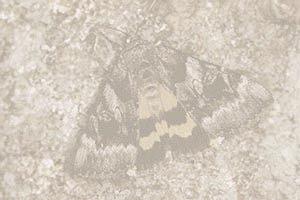
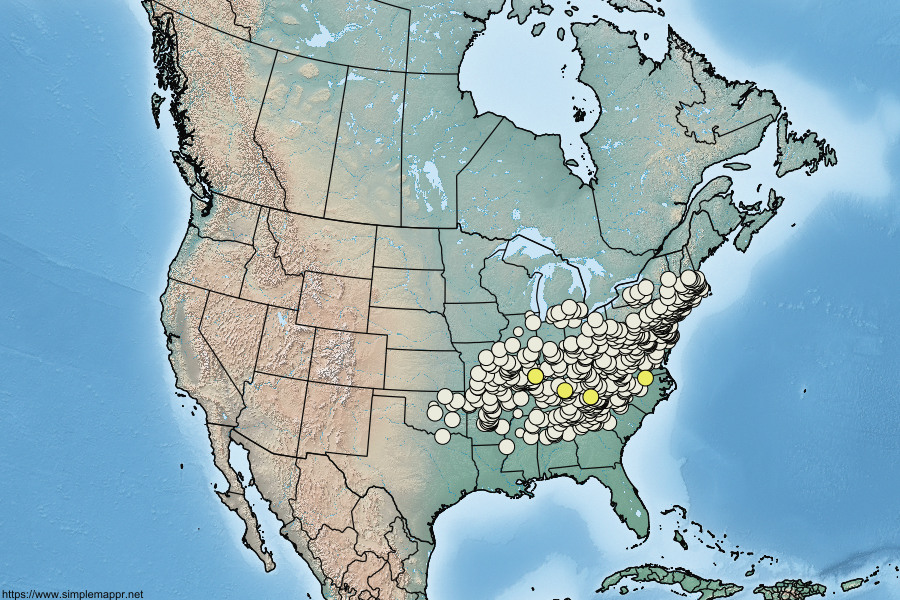
 Catocala flebilis
Grote, 1872
The following two-character head capsule key/preamble for 11 Juglandaceae-feeding Catocala should help you
navigate to
the right set of species.
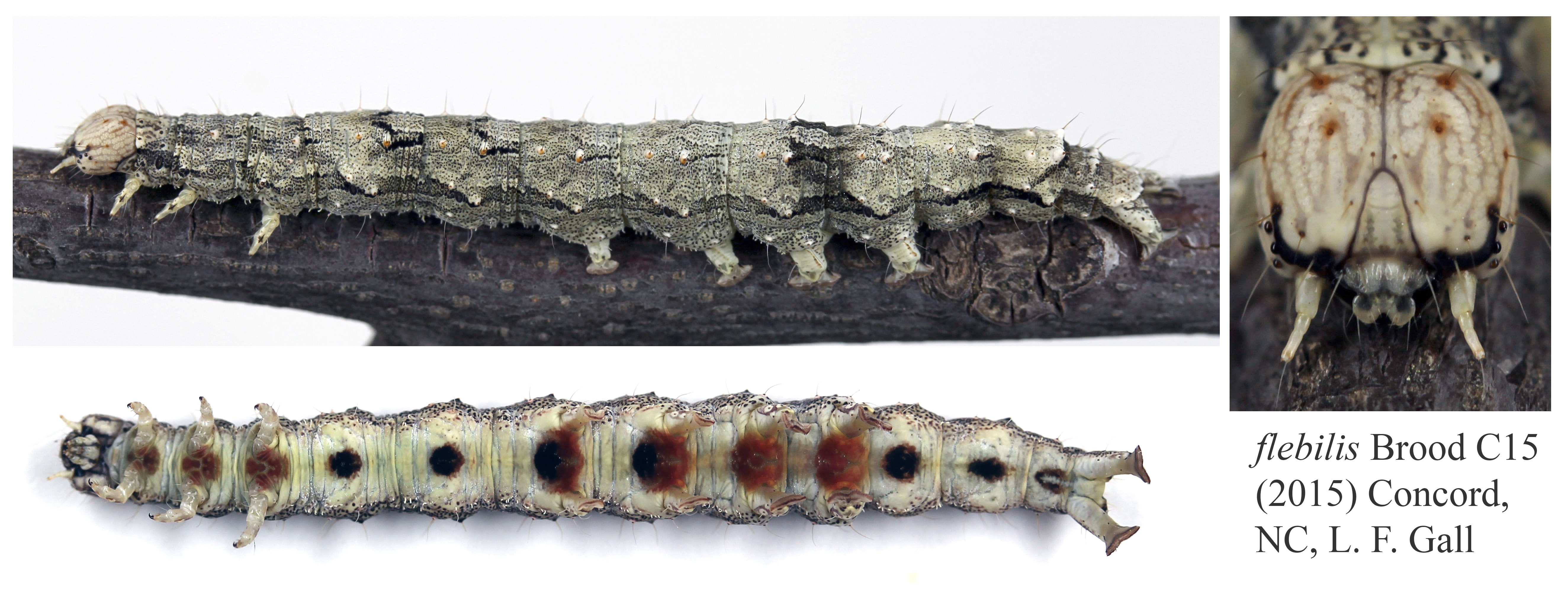
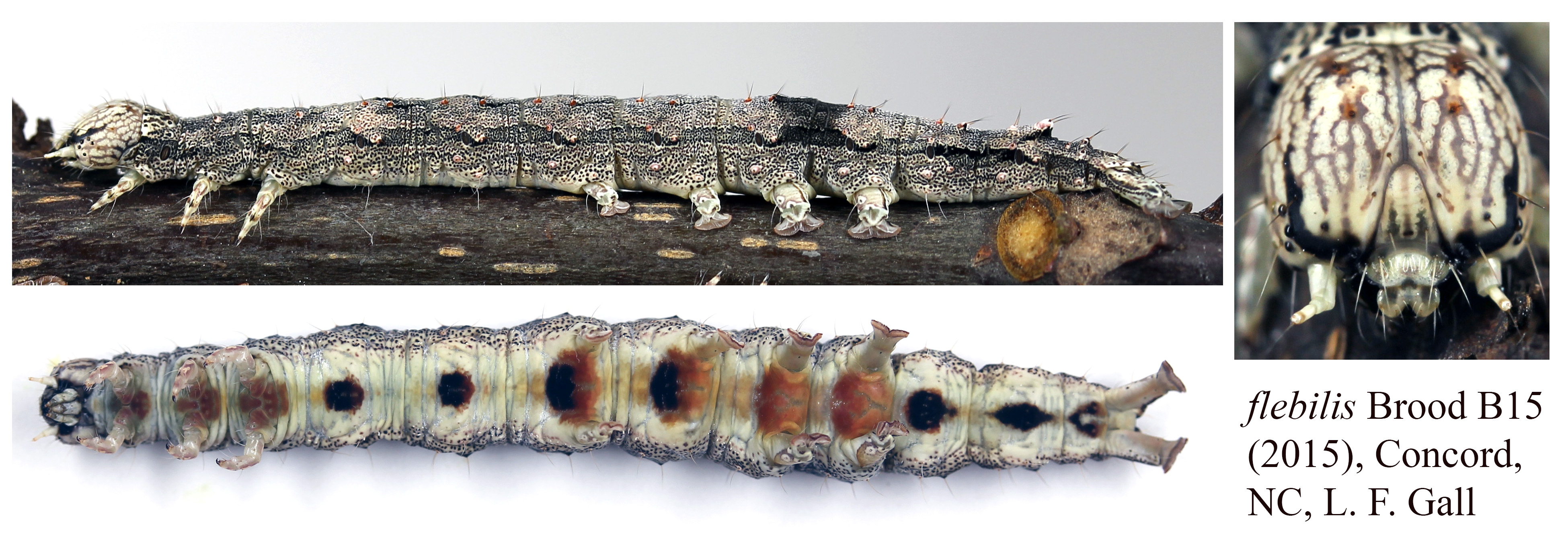
Black bar above mandibles and labrum ("moustache") pronounced in
flebilis,
insolabilis,
luctuosa,
myristica,
retecta,
vidua; only modestly so in
dejecta,
nebulosa,
subnata; absent to trace only in
lacrymosa,
palaeogama.
Moustache extends laterally up the capsule sides beyond S1/S2 (highest eyes) substantially so in
flebilis,
luctuosa,
retecta; modestly so in
vidua; not or nominally so in
dejecta,
insolabilis,
lacrymosa,
myristica,
nebulosa,
palaeogama,
subnata.
Just
flebilis
among these 11 species lacks long lateral filaments, these being either essentially absent to sparse and
of only nominal length (1 mm).
Dorsal and lateral ground color grey with varying darker striping; A5 patch usually much
darker, minimal A5 dorsal bump; whitish A8 tubercles. Venter ground color whitish, occasionally with hint of yellow,
spots outlined with purplish/orangish especially A3-A6. Front of head capsule lobes usually
pale ground color and striping wanting, and, notably, with thicker central line on dorsal part of each lobe discontinuous and
thereby presenting as central dot in lobe (reminiscent of analogous
dot in the unrelated
aholibah and
minuta). Pinnacula whitish often with orange infiltration.
Foodplants Carya (Section Eucarya) hickories with records of wild larvae/ovipositions on
Carya ovata (n=1), C. tomentosa (n=2) and C. glabra (n=4), and adults
not showing affinity for habitats dominated by C. ovata.

|