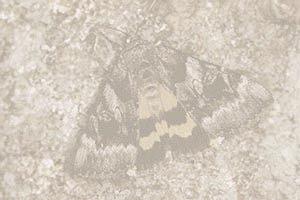
 Catocala vidua
(J. E. Smith, 1797)
The following two-character head capsule key/preamble for 11 Juglandaceae-feeding Catocala should help you
navigate to
the right set of species.
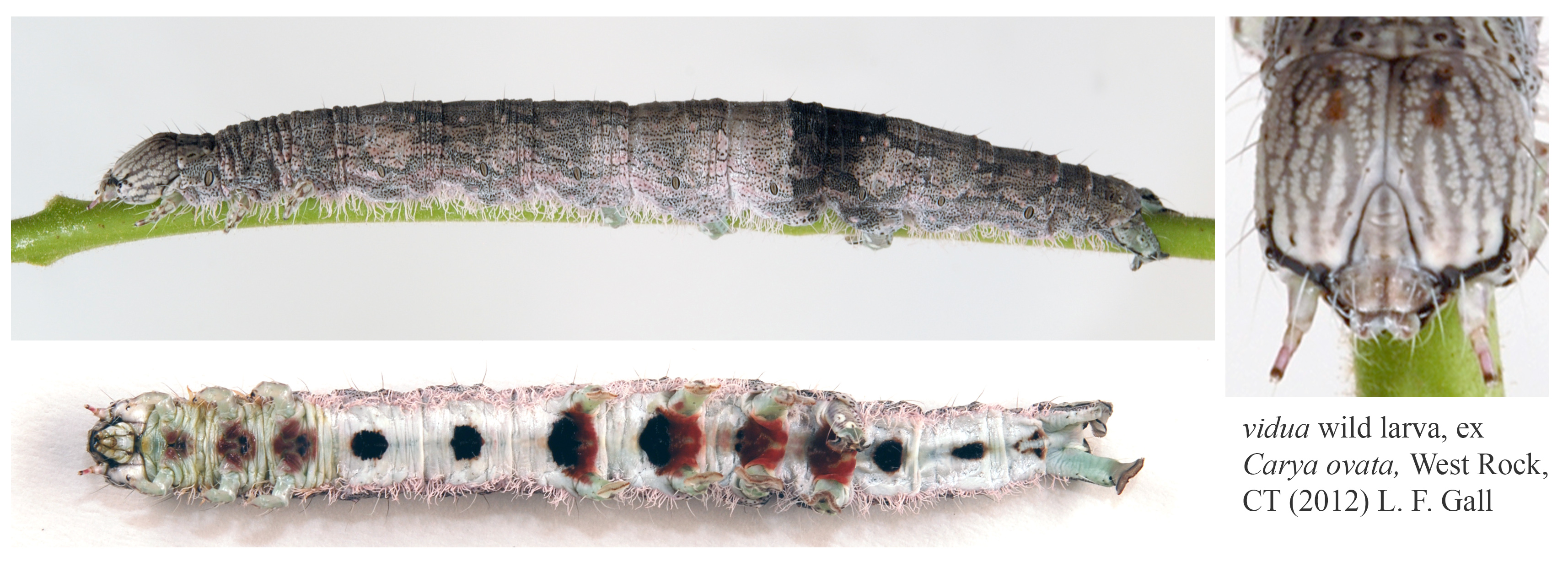
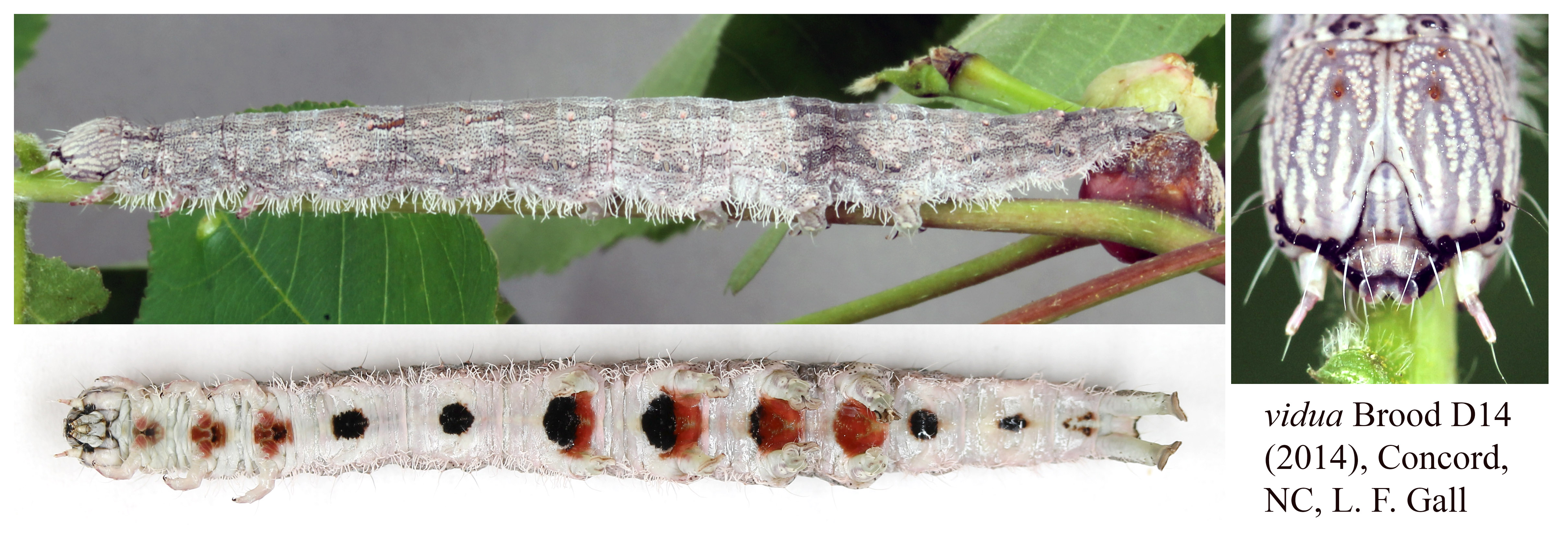
Black bar above mandibles and labrum ("moustache") pronounced in
flebilis,
insolabilis,
luctuosa,
myristica,
retecta,
vidua; only modestly so in
dejecta,
nebulosa,
subnata; absent to trace only in
lacrymosa,
palaeogama.
Moustache extends laterally up the capsule sides beyond S1/S2 (highest eyes) substantially so in
flebilis,
luctuosa,
retecta; modestly so in
vidua; not or nominally so in
dejecta,
insolabilis,
lacrymosa,
myristica,
nebulosa,
palaeogama,
subnata.
Larvae of
myristica and
vidua have
greyish white dorsal/lateral ground color, with rather indistinct striping, light pinacula, A5 with modest
patch and wanting bump, and modest A8 tubercles especially so in vidua; they appear quite sleek in profile, notably
vidua.
Venters in both species
bright white with the dark spots shaded with purple/orange (usually more in vidua).
Head capsules light grey/ochre ground with correspondingly deeper lines.
That is where the similarity ends. You can find
vidua larvae and adults
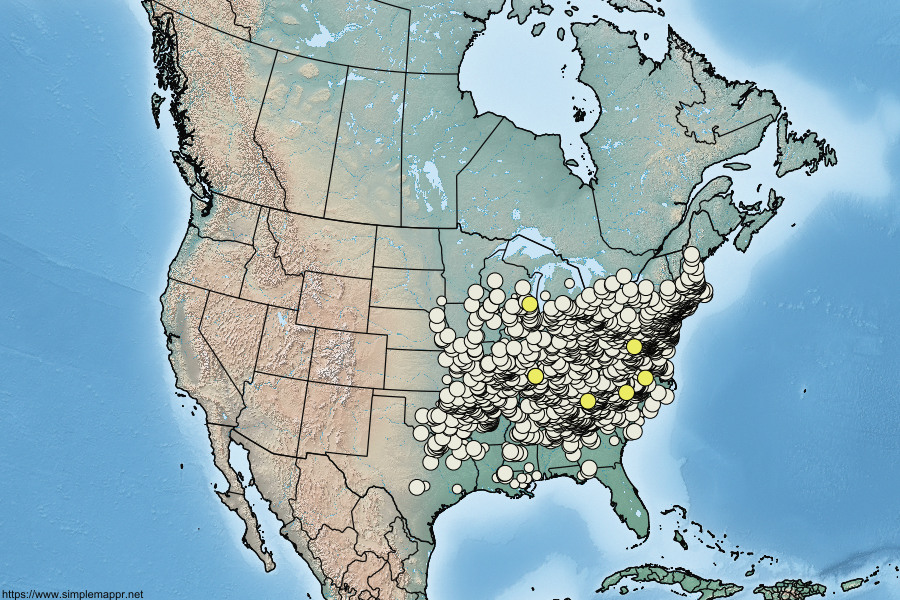
across the Nearctic east of the Mississippi River affiliated with
Carya (Section Eucarya) hickories, with wild larval/oviposition records
encompassing Carya ovata, C. tomentosa, C. glabra and C. pallida (one documented Juglans).
You will not find
myristica
unless you get up close and personal with a reasonably-sized tree of the rare, spottily disjunct
and habitat-localized Nutmeg Hickory (Carya (Section Apocarya) myristiciformis), on
which it is restricted (ovipositions have been
recorded but wild larvae have yet to be searched for).
Adults were effectively uncollected and unstudied until
the foodplant connection was made this century, the only 20th century/earlier specimens we know of in any institutional/personal
collection on a global basis being two from 1988 at the American Museum of Natural History (placed
tentatively under robinsonii by the late AMNH noctuid expert Eric Quinter; see
Kons & Borth, 2015). Although
adults of myristica and robinsonii are extremely similar, the larva of
robinsonii is utterly unlike
that of myristica.

|