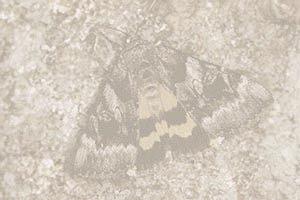
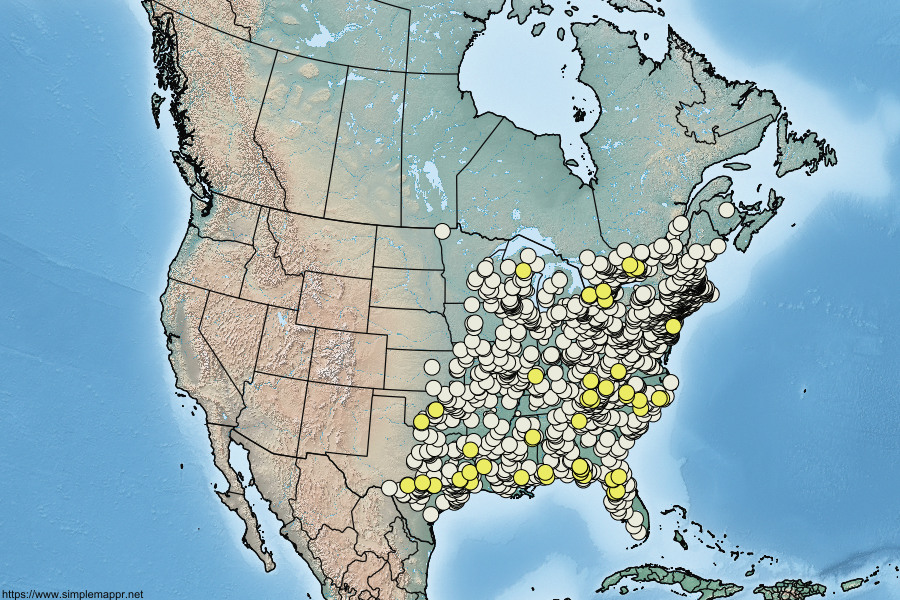
 Catocala lineella
Grote, 1872
One member in a distinctive clade of 4 small yellow-hindwinged Catocala species, which includes
amica,
lineella,
jair and
pinicola.
Both amica and lineella are widespread and abundant as adults in eastern North America
wherever oaks occur, and are
also frequently encountered as larvae; pinicola is widespread in the southern tier
of the USA, but becomes more sporadic in barrens and oak scrubs northward; jair is the least frequently found
and is even further
restricted to the most xeric and open barrens/scrubs (but it can be common in habitat). Larvae of
amica
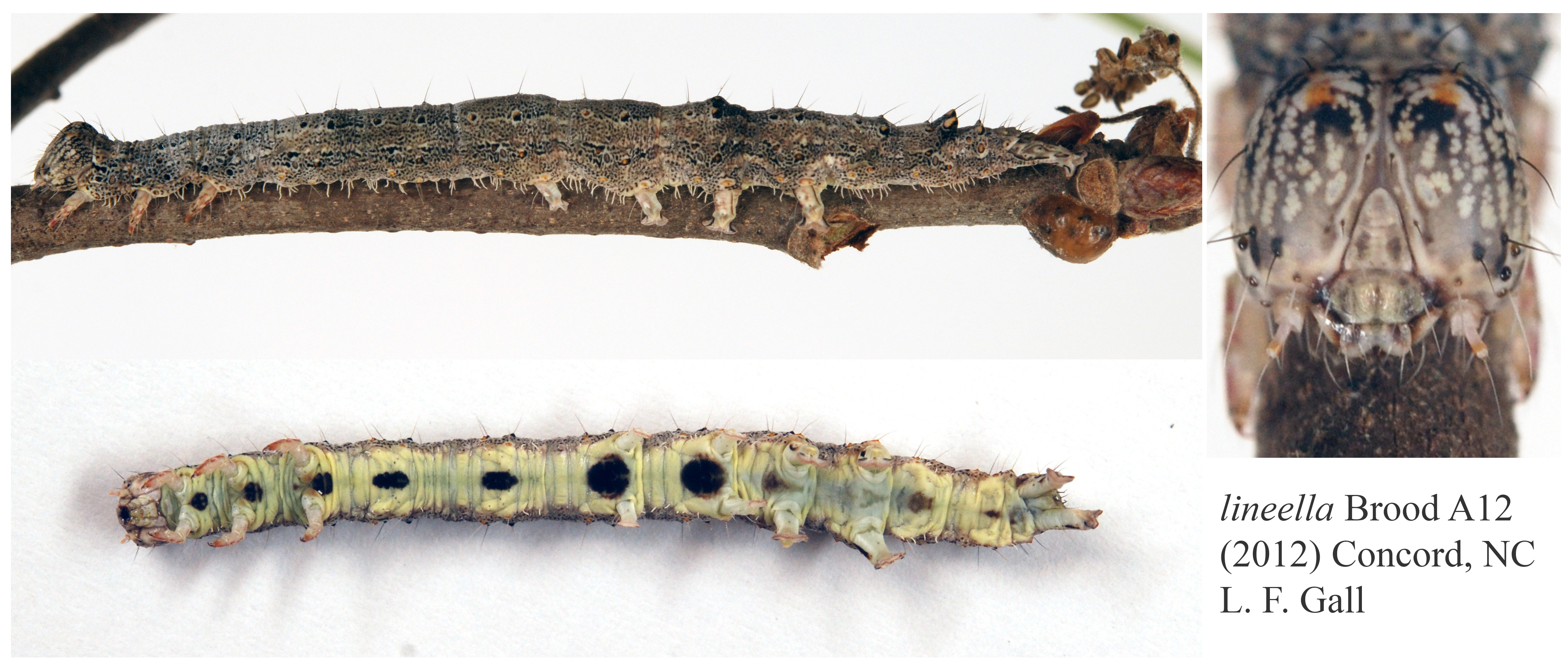
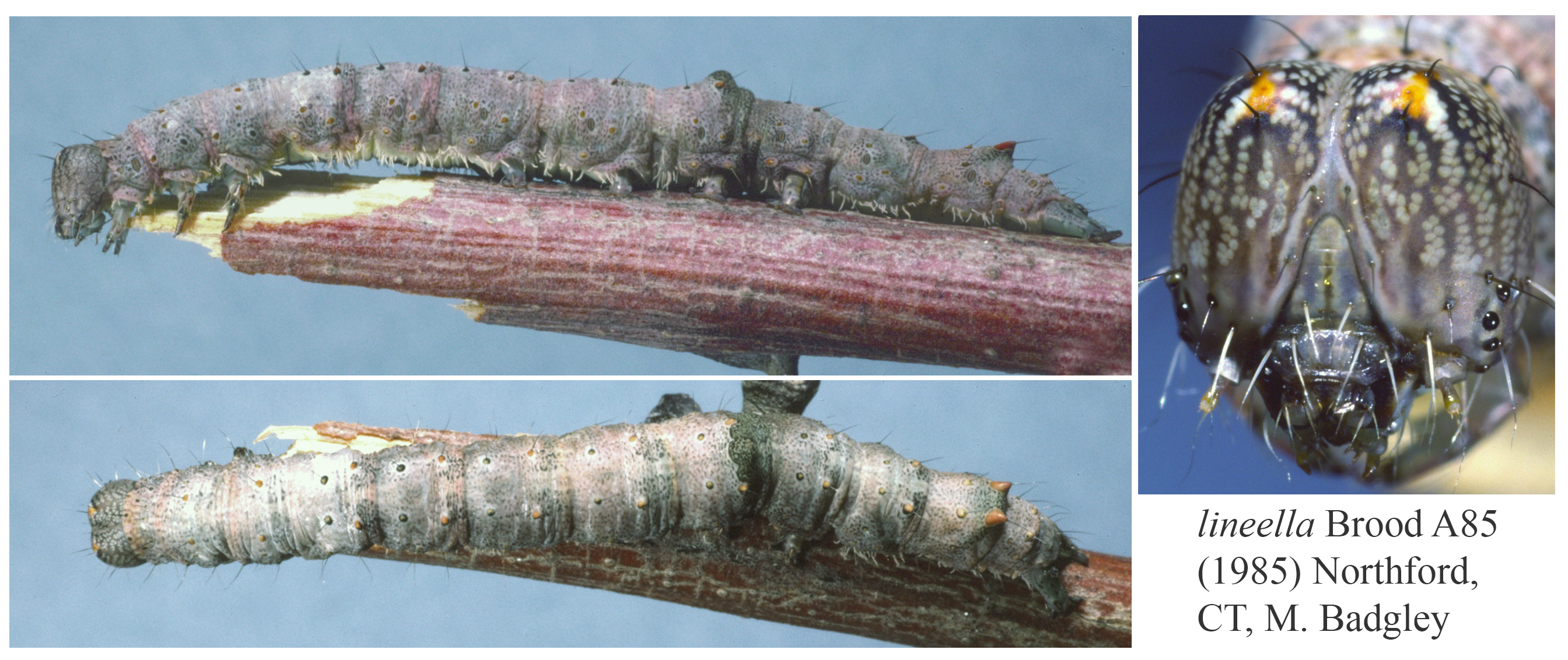
often have a lighter
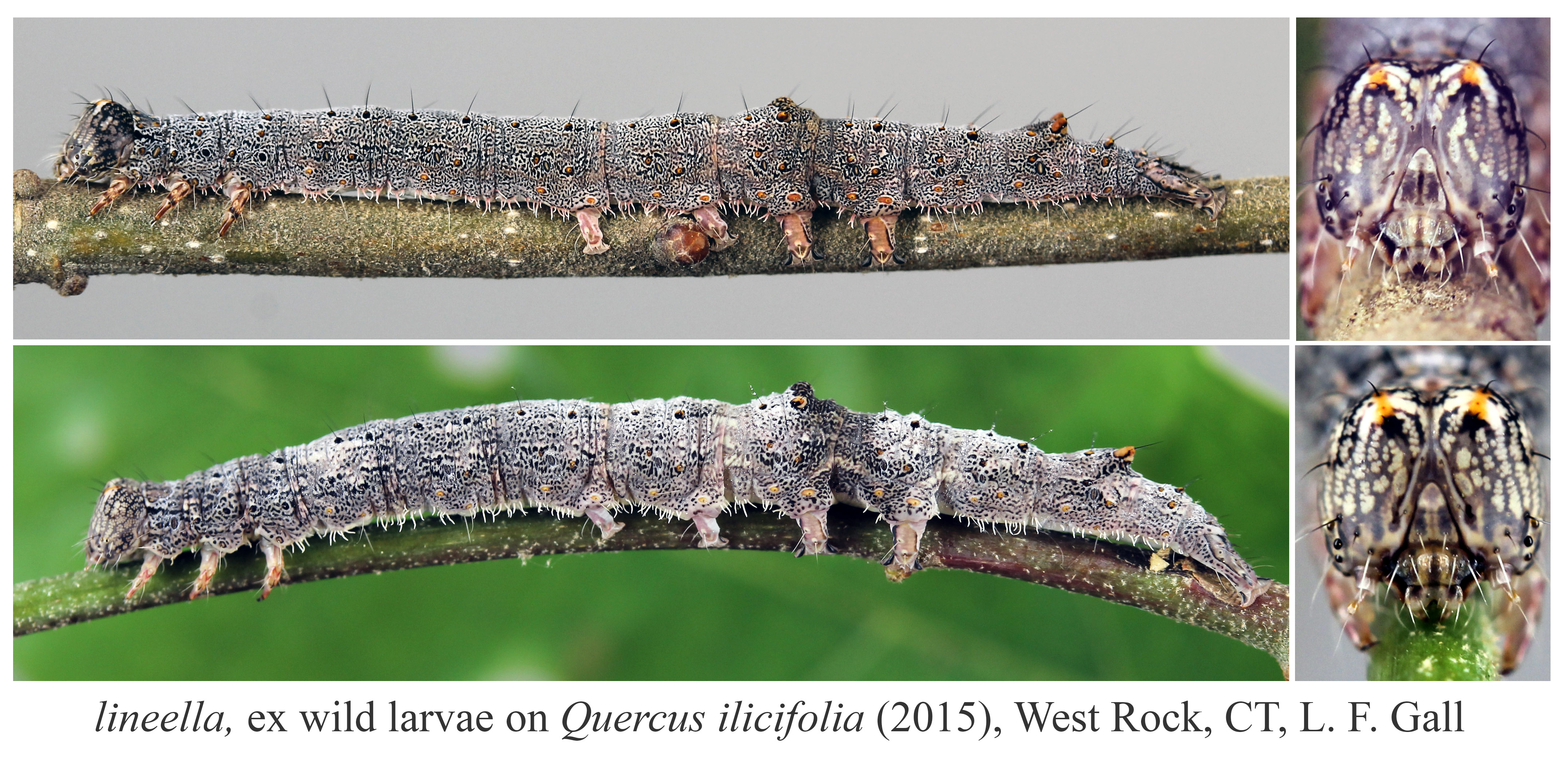
tan ground color compared to the darker steely and purplish-tinged ground color of
lineella,
especially from A5 toward
the anterior; in amica the
dorsal tubercles are
usually black with more limited orange than in lineella; many larvae cannot be confidently
assigned to either amica or lineella
without the reared adult. In comparison to the other three species, larvae of
jair
are more uniformly light gray with
less prominent markings. Penultimate and ultimate instar larvae of
pinicola
are also typically separable
owing to the extensive brown to brownish green dorsally and laterally, which imparts a mottled and
noticeably "greasy" appearance to the body. The ventral dark spots of
jair
and
pinicola
are often (variably)
connected by a sparse line mid-venter, whereas the line is essentially absent in
amica
and
lineella.
A number of Quercus are recorded as wild foodplants; larvae of
amica
more often use
"white" oaks (Section Quercus) and
lineella
more often use "red" oaks (Section Lobatae), but there is considerable overlap;
pinicola
and
jair
are
largely restricted to Quercus ilicifolia in the northern parts of their ranges, but also use other oaks to the south.

|