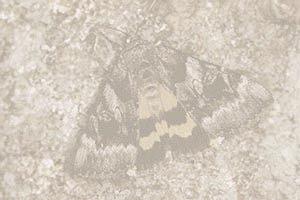
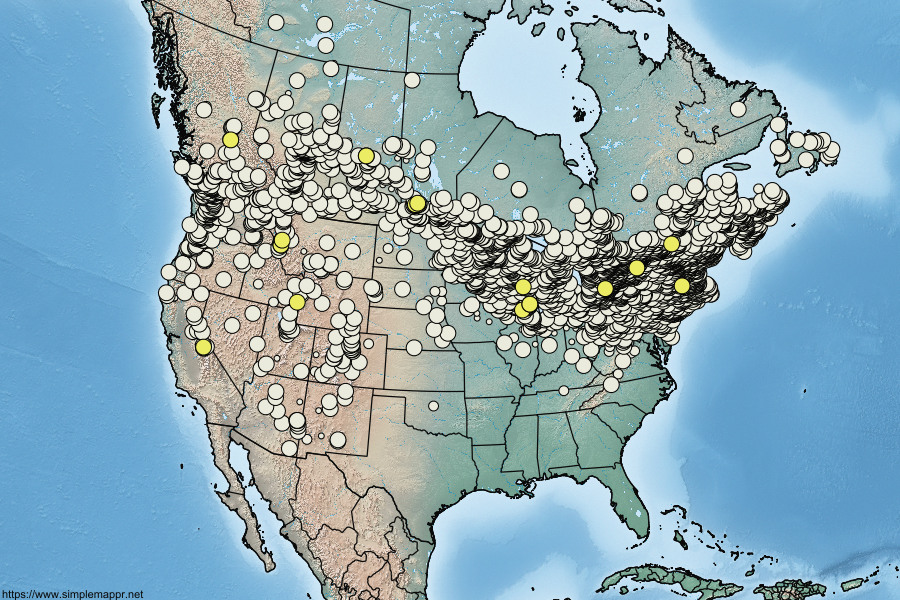
 Catocala relicta
Walker, 1858
A widespread and commonly encountered Salicaceae-feeding Catocala species as a larva, and
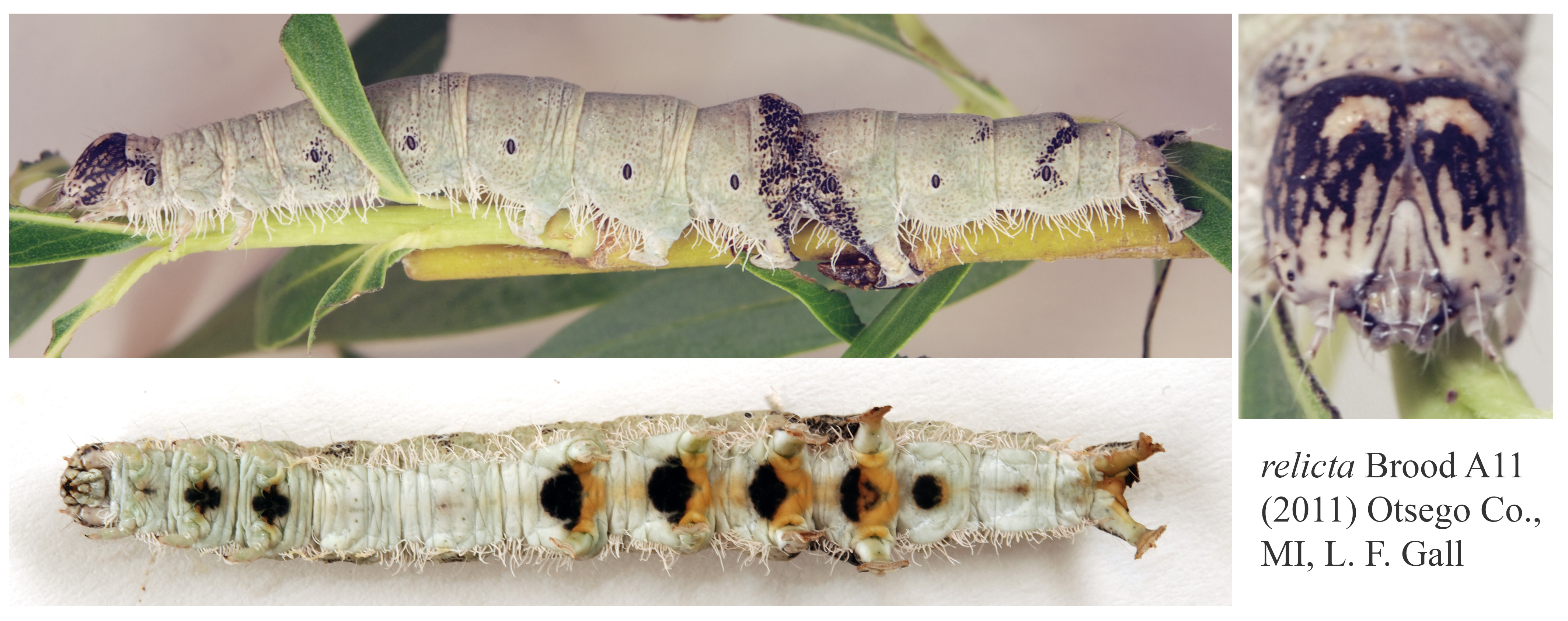
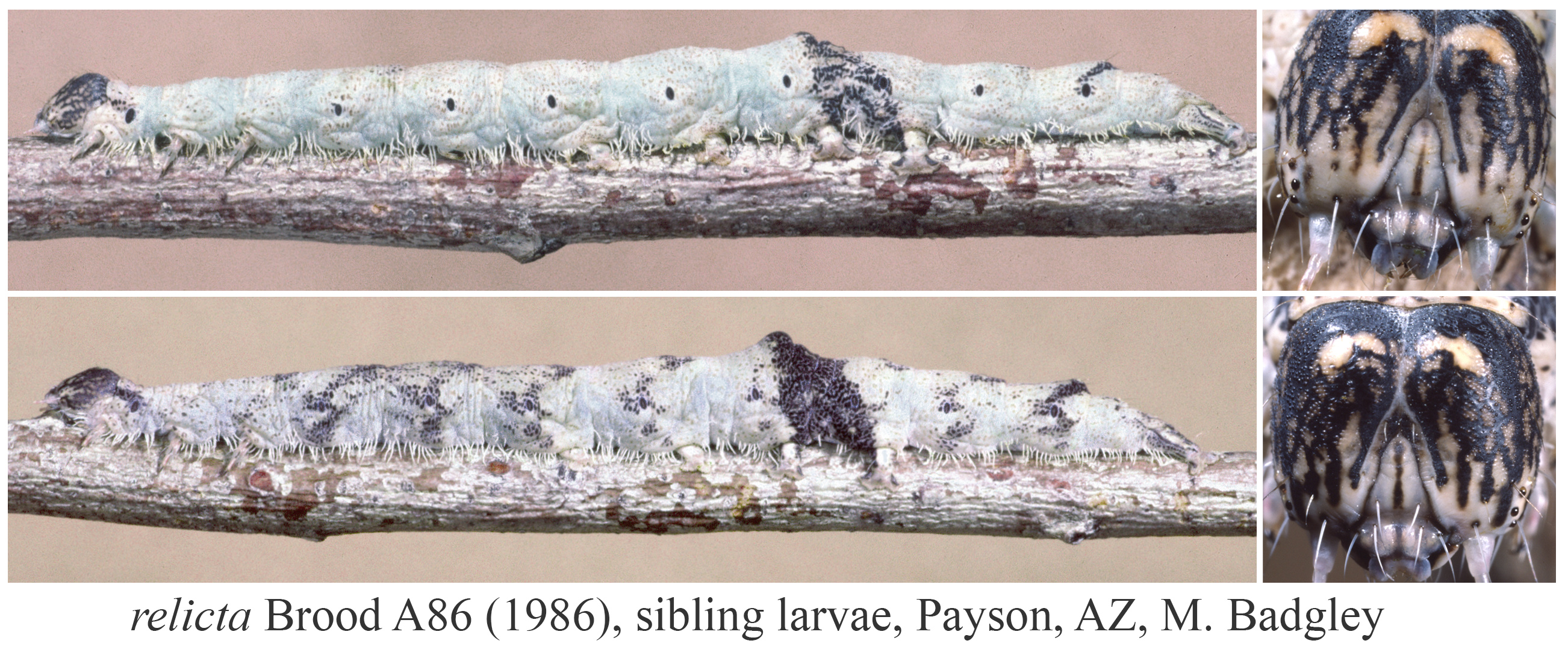
also the most easily recognized among those several dozen species. Body color pale to creamy white throughout, with
strongly contrastingly demarked dark A5 saddle patch, little evidence of lateral striping; typically with just indistinct darker stippling
over body, but some larvae with patchy dark dorsal splotches, sometimes with nearly completely darkened body; lateral filaments numerous and quite long, "eye-lashy" and thin;
head capsule
covered with noticeably lattice-like dark reticulations, especially beyond the lobes and vertex and sides thereby accentuating
the two wide and prominent whitish/cream chevrons; venter white with black spots edged with orange at their bases on A3-A7, particularly A3-A5;
spots also typically present on T2-T3; spots usually absent on A1/A2, but can be expressed to some degree apparently rarely and perhaps in conjunction with dark dorsal splotches and more northerly distribution. Most wild larval records are for Populus, especially Populus tremuloides, and only
occasionally Salix.
|