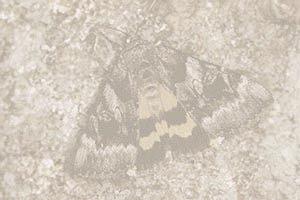
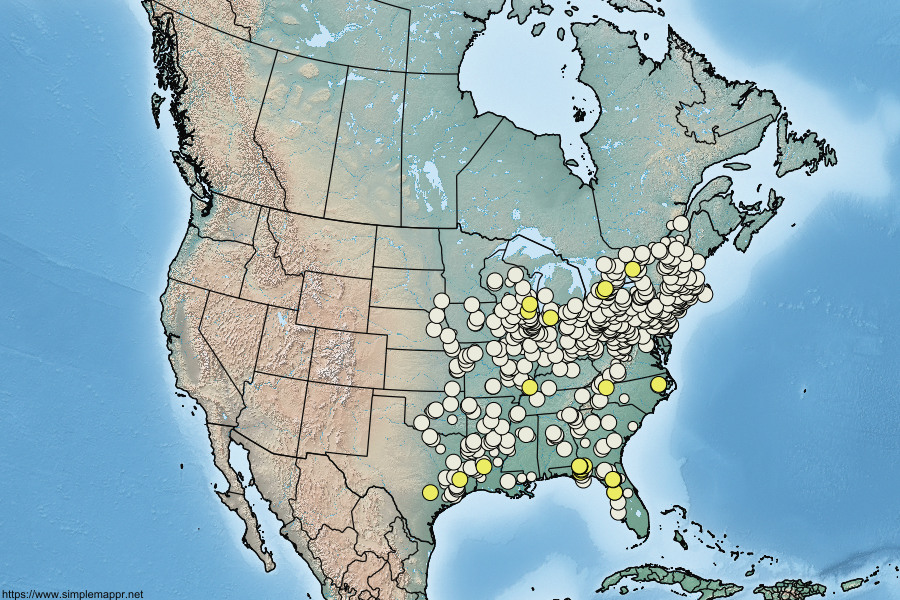
 Catocala mira
Grote, 1876
There are 9 Rosaceae-feeding Catocala whose morphologies overlap
and for which separation is tricky in the absence of a reared adult. They are grouped here for
comparison:
blandula,
crataegi,
dulciola,
grisatra,
grynea,
lincolnana,
mira,
miranda and
praeclara.
More rearing work is needed, but that being said, and with the caveat that all characters vary,
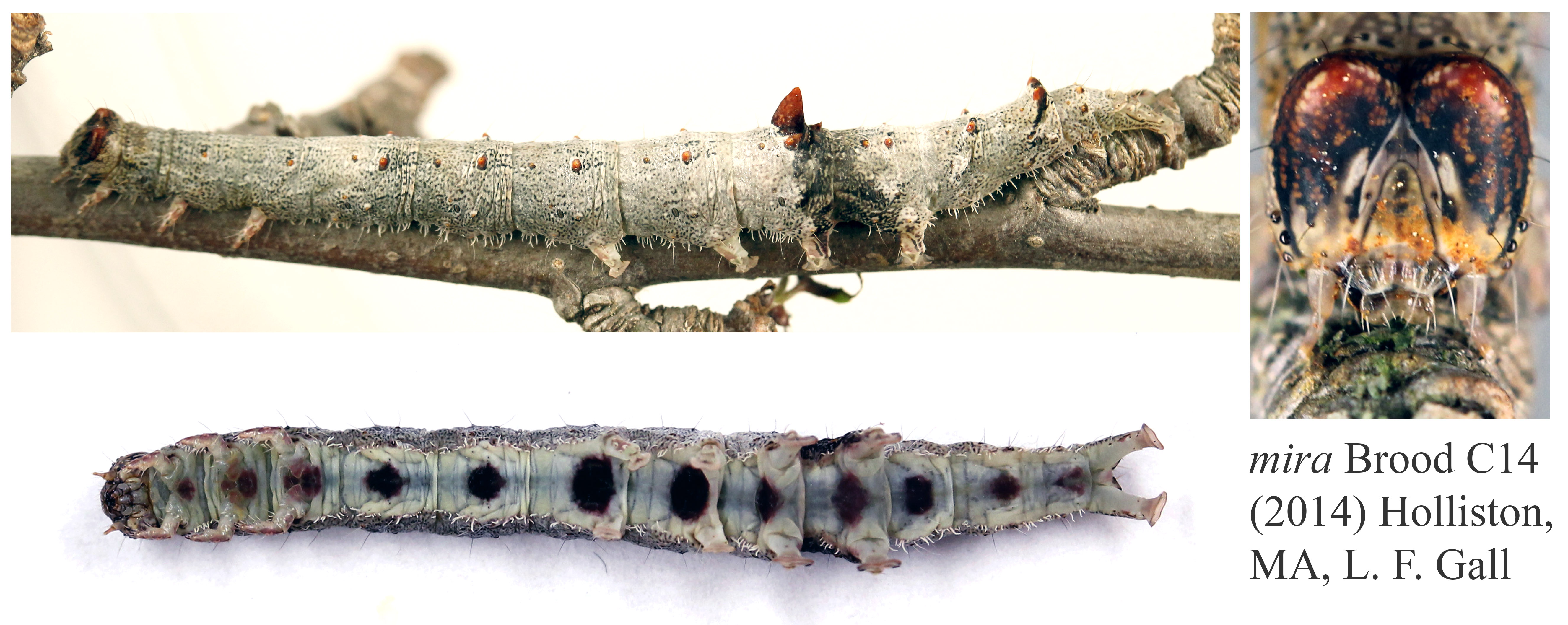
there are signposts to follow. Large A5 horn typical for
grynea and
mira; small horn on
blandula and
crataegi;
horn usually long and characteristically pointed vertically or recurved toward head in
miranda; horn
stout and bulbous in
grisatra.
Moderately long multifurcating lateral filaments are the norm, but are longer in the few
lincolnana larvae known and
shorter in the few
dulciola known.
Dark dorsal "racing stripes" common in
blandula and
lincolnana (note also
pretiosa).
Both
blandula and
grynea often sport a
strongly orange A5 saddle contrasting with ground color.
Head capsule of
mira usually the only one of these
9 with lobes heavily suffused with black to reddish black (note black lobes in
orba).
As far as known, foodplant use essentially limited to Crataegus in
crataegi,
dulciola,
grisatra,
lincolnana and
miranda (note that
crataegi has also been recorded on Planera aquatica);
praeclara
uses Aronia (but so does
pretiosa);
grynea is principally on
Malus, although both
blandula and
mira use Malus occasionally and
Crataegus typically.
Habitat for
grynea is often suburban, and
grisatra appears restricted to
open dry sites with Crataegus flava. In the southern Nearctic, the mostly ubiquitous presence of
alabamae confounds larval identification
for these 9 species.


|