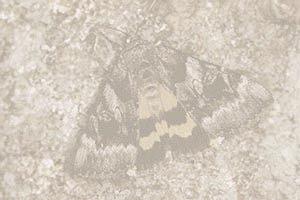
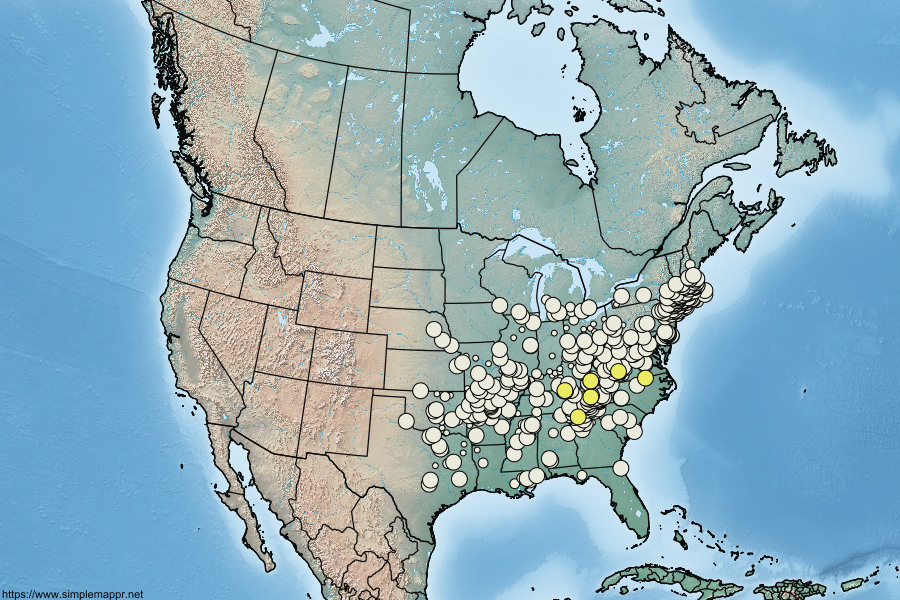
 Catocala dejecta
Strecker, 1880
The following two-character head capsule key/preamble for 11 Juglandaceae-feeding Catocala should help you
navigate to
the right set of species.
Black bar above mandibles and labrum ("moustache") pronounced in
flebilis,
insolabilis,
luctuosa,
myristica,
retecta,
vidua; only modestly so in
dejecta,
nebulosa,
subnata; absent to trace only in
lacrymosa,
palaeogama.
Moustache extends laterally up the capsule sides beyond S1/S2 (highest eyes) substantially so in
flebilis,
luctuosa,
retecta; modestly so in
vidua; not or nominally so in
dejecta,
insolabilis,
lacrymosa,
myristica,
nebulosa,
palaeogama,
subnata.
The combination of head capsule characters above lead to
dejecta,
nebulosa,
subnata,
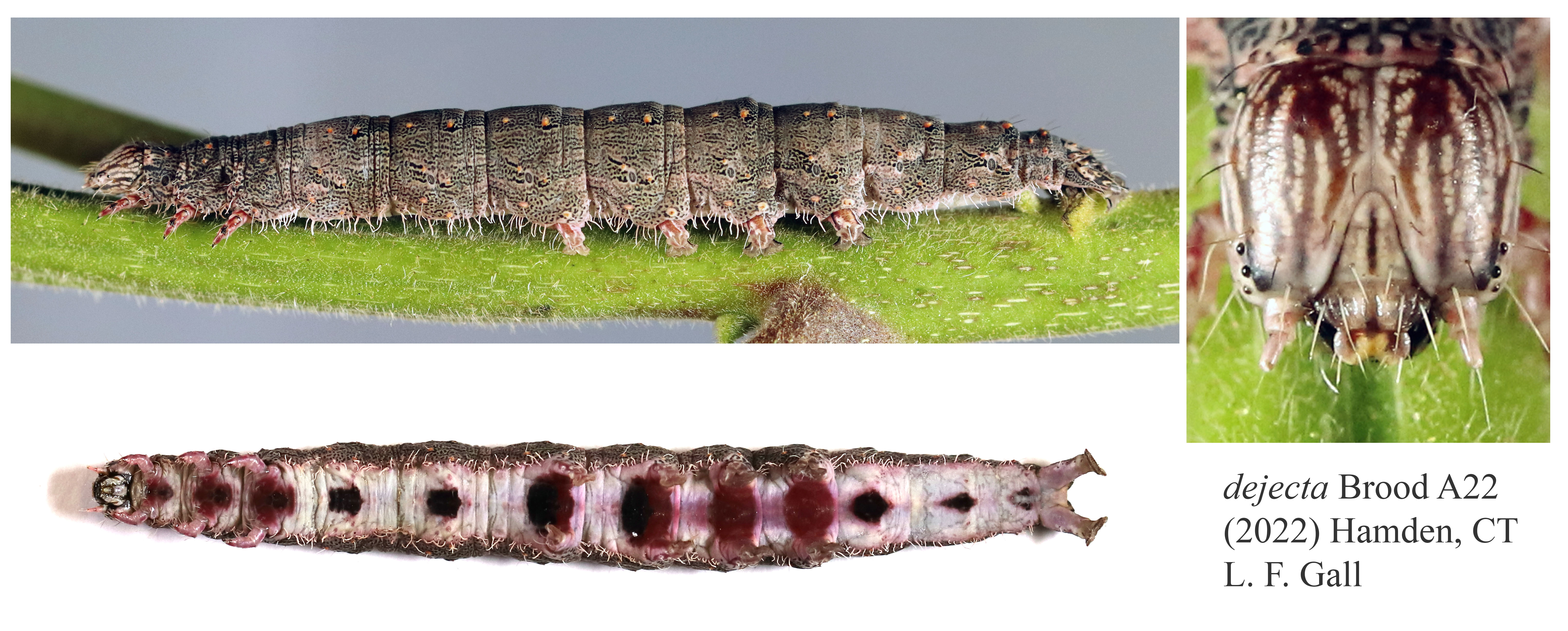
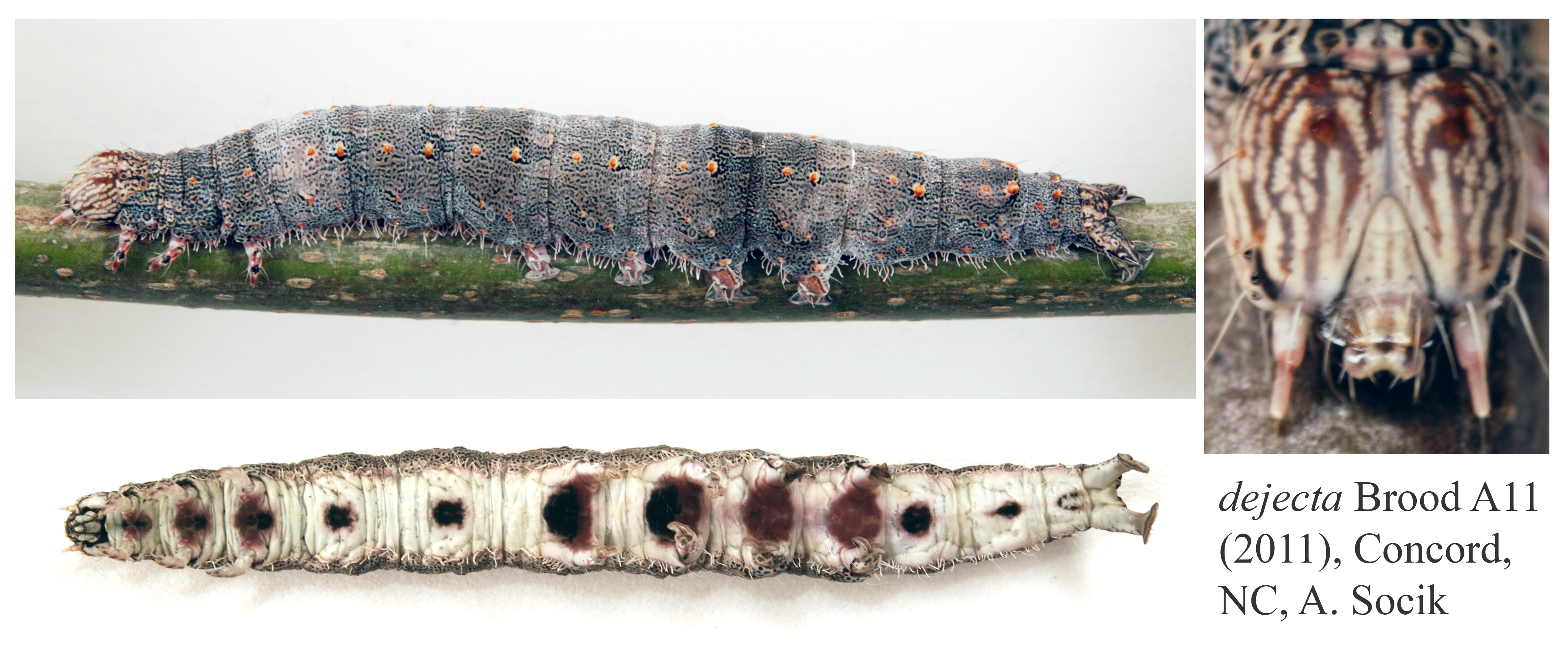
but dejecta usually quickly separated by combination of its near lack of A5 bump,
diminutive A8 tubercles, orangish pinacula, and generally darker ground color and diffusely stippled/banded
body maculation. Ventrally
dejecta
with whitish ground and contrasting purplish shading to spots; both
nebulosa and
subnata
with yellowish ground color infusion (often strongly so in some nebulosa).
Filaments similar in all three.
Dorsally
subnata
is usually glassy and smooth (i.e., slug-like) and with pattern absent from portions of A1-A8;
these characters less strongly expressed in
nebulosa.
Pinacula of
subnata
whitish, those of
nebulosa varied with
capitad pinaculum on each segment tending whiter and anad pinaculum tending yellow/orange.
Foodplants Carya (Section Eucarya) hickories for dejecta with records of wild larvae/ovipositions on
Carya tomentosa (n=2) and C. glabra (n=1); adults not strongly affiliated with C. ovata
dominated habitats. Both nebulosa and subnata are specialists restricted to Carya (Section Apocarya)
cordiformis (over 50 wild larvae/oviposition records for subnata, ca. 20 and accumulating for
nebulosa given its incursion 2015-2020 into much of northeastern Nearctic).
|