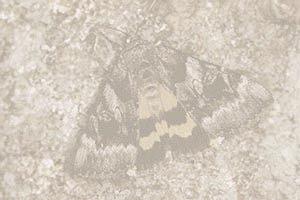
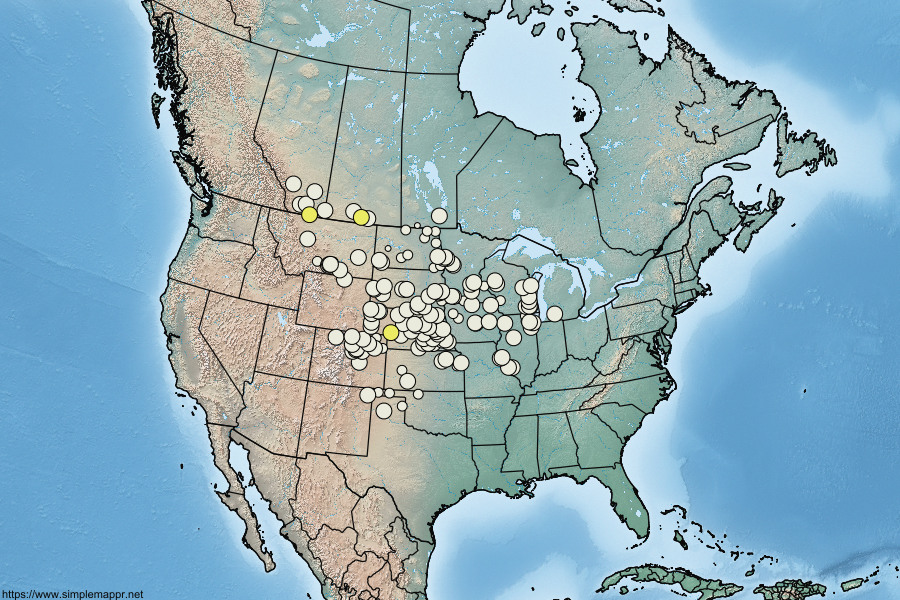
 Catocala luciana
Strecker, 1874
In the northern and western Nearctic, and south through the Rocky Mountains and Plains states into Texas and
northern Mexico, are 14 medium to large Catocala species
feeding on willows and poplars, whose larvae are similar with overlapping morphologies.
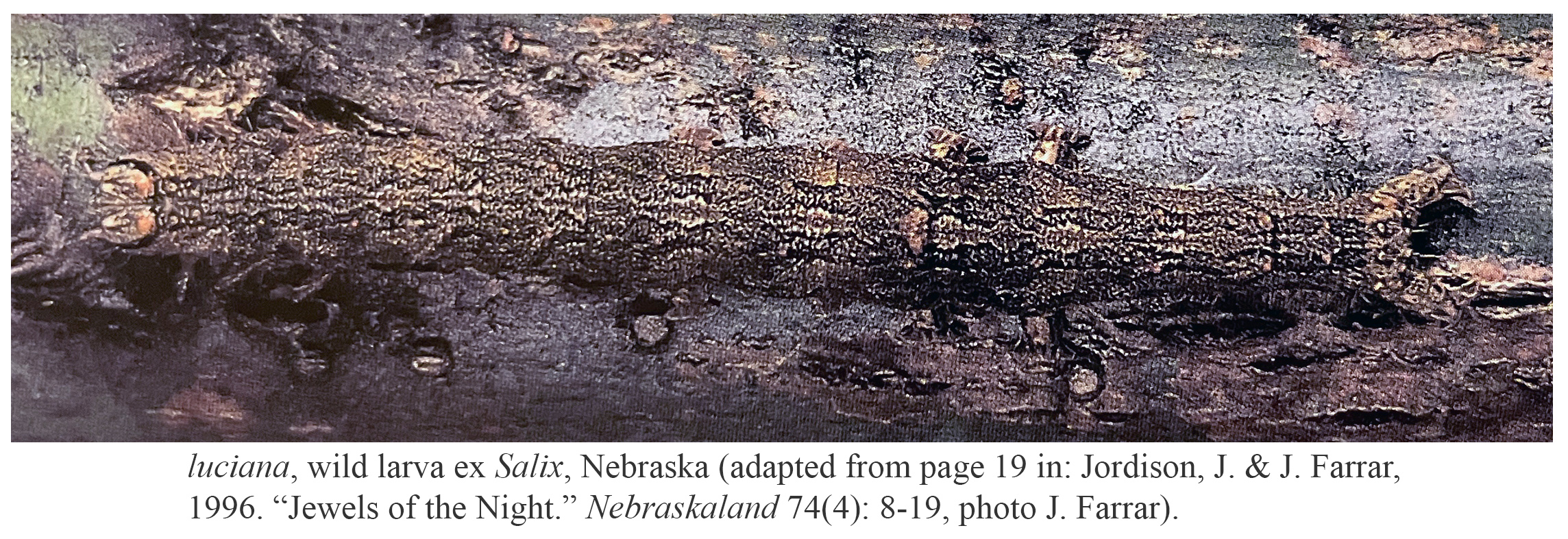
But as a group these 14 are recognizable -- thin, linear lateral filaments; cream to tan to light gray body color (some
darkly maculated morphs occur);
A5 saddle patch darker
than ground color, dorsolateral to dorsoventral bands typically prominent only on A5;
low transverse A5 bump, often lightly colored on top; head capsule color like body color, modest protruding
lobes with ochre/orange accents and indistinct netlike lobe/frons striping; varyingly and usually diffusely edged
black lateral lines from ocelli to vertex, extending onto capsule top;
black venter spots throughout, notably around A2-A5; venter color off-white sometimes with mauve/pink overtone.
The culprits include
babayaga,
briseis,
californica,
cleopatra,
faustina,
grotiana,
hippolyta,
irene,
jessica,
junctura,
luciana,
meskei,
semirelicta and
texanae.
In many regions the choice can be narrowed to just a couple species. However, because (a) the extent of
geographic pattern variation and (b) larval foodplant preferences among
Populus and Salix both remain poorly documented, it is typically dicey to assert
species identity for most wild larvae with confidence in the absence of a reared adult. The larva of
texanae is unknown and would be a good target/challenge for those of you in the Lone Star State.

|